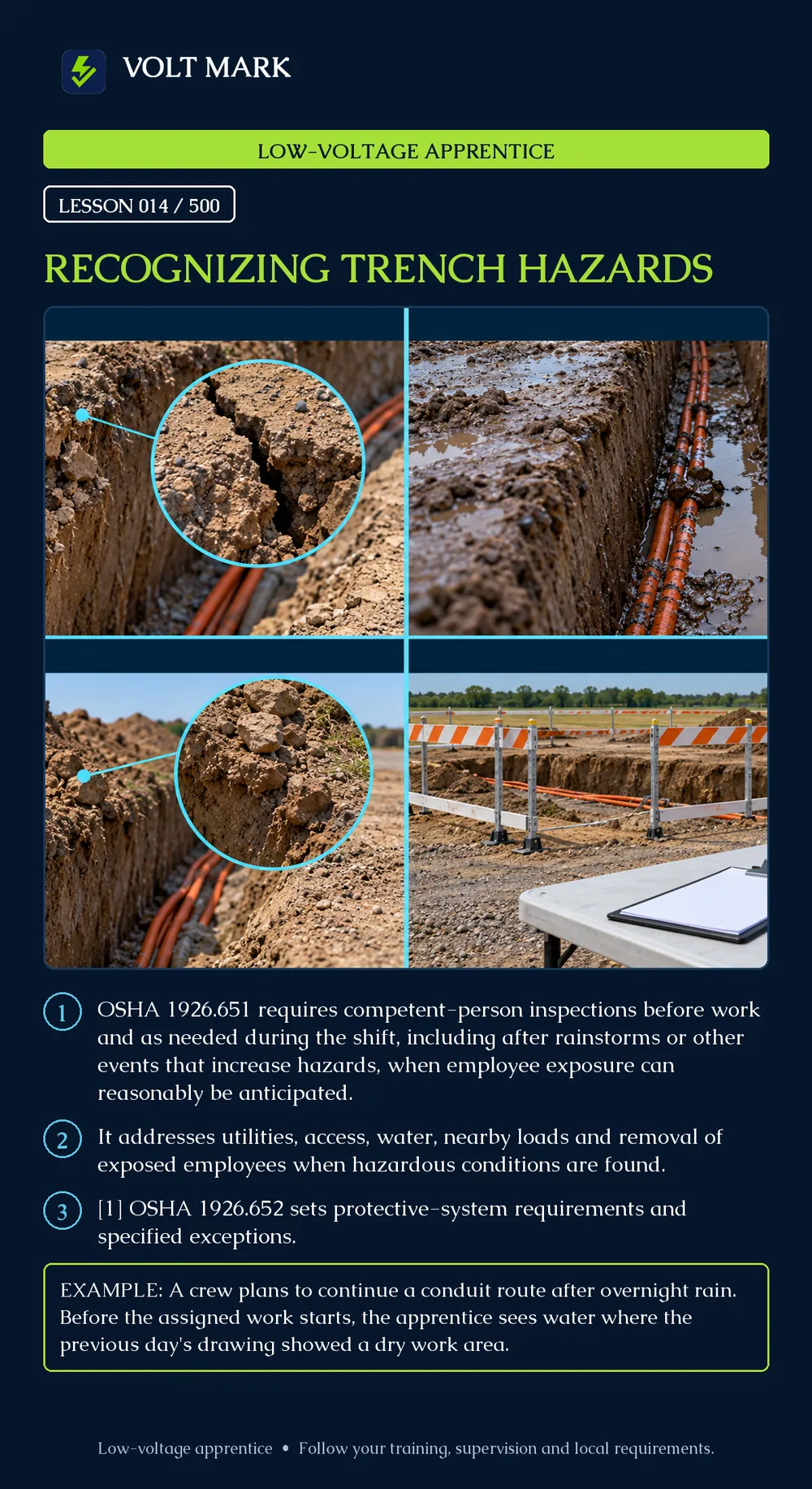
An underground cable assignment does not make the surrounding excavation a low-risk place. The ground, water, nearby activity and protective arrangements require assessment by the responsible people.
OSHA 1926.651 requires competent-person inspections before work and as needed during the shift, including after rainstorms or other events that increase hazards, when employee exposure can reasonably be anticipated. It addresses utilities, access, water, nearby loads and removal of exposed employees when hazardous conditions are found. [1] OSHA 1926.652 sets protective-system requirements and specified exceptions. A casual visual impression or the phrase "it is shallow" does not establish that an exception applies. This lesson does not select a slope, shield or support system. [2]
Ask who performs the excavation assessment and how the work team receives direction. "Someone looked at it yesterday" does not identify the current decision, applicable conditions or authorized task. Your contribution is a precise report from a permitted position. Do not classify soil, test an edge with your weight, adjust shoring or enter to measure something for this exercise.
A crew plans to continue a conduit route after overnight rain. Before the assigned work starts, the apprentice sees water where the previous day's drawing showed a dry work area. The apprentice reports the location and changed condition. The required reassessment occurs before affected work proceeds. The apprentice does not decide the water is too shallow to matter.
Write a short report using the water panel: "Water has accumulated in the section planned for conduit work after rain. The affected work is paused pending the responsible person's reassessment." Add the actual location identifier that the site would use.
Focusing only on the item being installed. A cable can be simple while its installation environment requires substantial planning and protection.
Recognize ground, water and edge hazards. Know the required supervision. Report changed conditions before affected work continues.
Texas journeyman, 15 questions, scored by topic against the 70% mark. No card, and no account needed to start.
Free study material for low-voltage apprentices. This is a national foundation course: requirements differ by state and by local jurisdiction, and a practice that is common in one place is not a rule everywhere. Nothing here is a licence, a certification, or authority to work unsupervised, and completing it does not count as apprenticeship hours or continuing-education credit. Check the codes adopted where you are working, the licensing authority for that work, and your employer's safety programme. VoltMark is not affiliated with, endorsed by, or sponsored by NFPA, OSHA, NICET, BICSI, FOA, or any state or local licensing authority.

Electrician licensing exam prep: practice questions, timed exam simulations, and step-by-step help finding every answer in the NEC.